🎵 How Does the Brain React to Music?
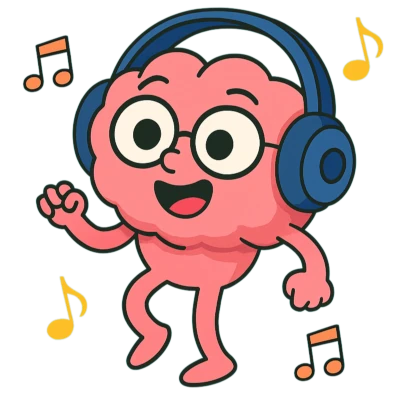
Have you ever felt goosebumps from a song? Or found your foot tapping without even realizing it? That’s your amazing brain at work!
🎧 Music Lights Up the Brain
Listening to music activates multiple brain regions at once, including:
- Auditory Cortex – Processes sound.
- Hippocampus – Connects music to memories.
- Motor Cortex – Makes you move to the beat.
- Prefrontal Cortex – Helps interpret emotions in music.
- Nucleus Accumbens – Releases dopamine, the “feel-good” chemical.
🎶 Music and Emotions
- Music can boost your mood, reduce stress, and even help manage anxiety and depression.
- Sad music doesn’t always make us sad—it helps us process emotions.
🧠 Music Helps Memory
- Music can trigger vivid memories—especially familiar songs from childhood or important life events.
- Therapists use music to help patients with Alzheimer’s or dementia access lost memories.
🕺 Music Makes You Move!
- The beat of music syncs with your brain’s timing system, making it nearly impossible to sit still when a catchy rhythm plays.
- Dancing to music helps improve coordination and brain-body connection.
🧒 Music & Brain Development in Kids
- Learning music improves language skills, concentration, and math ability.
- Playing an instrument strengthens neural pathways and executive function.
🎼 Fun Fact!
Professional musicians often have larger and more connected corpus callosums—the bridge between the brain’s two hemispheres!
🧒 Music & Brain Development in Kids
- Learning music improves language skills, concentration, and math ability.
- Playing an instrument strengthens neural pathways and executive function.
💡 Curious Challenge
Try listening to different types of music—classical, rock, jazz, or lo-fi—and notice how each one makes you feel. Your brain is tuning in more than you realize!